Learn how dental implants support long-term oral health, protect jaw bone, and provide safe tooth replacement in Yeovil.
Losing a tooth can change the way you eat, speak, and even smile.
So when your dentist suggests dental implants, it’s natural to pause and ask: Are they truly safe for your long-term oral health?
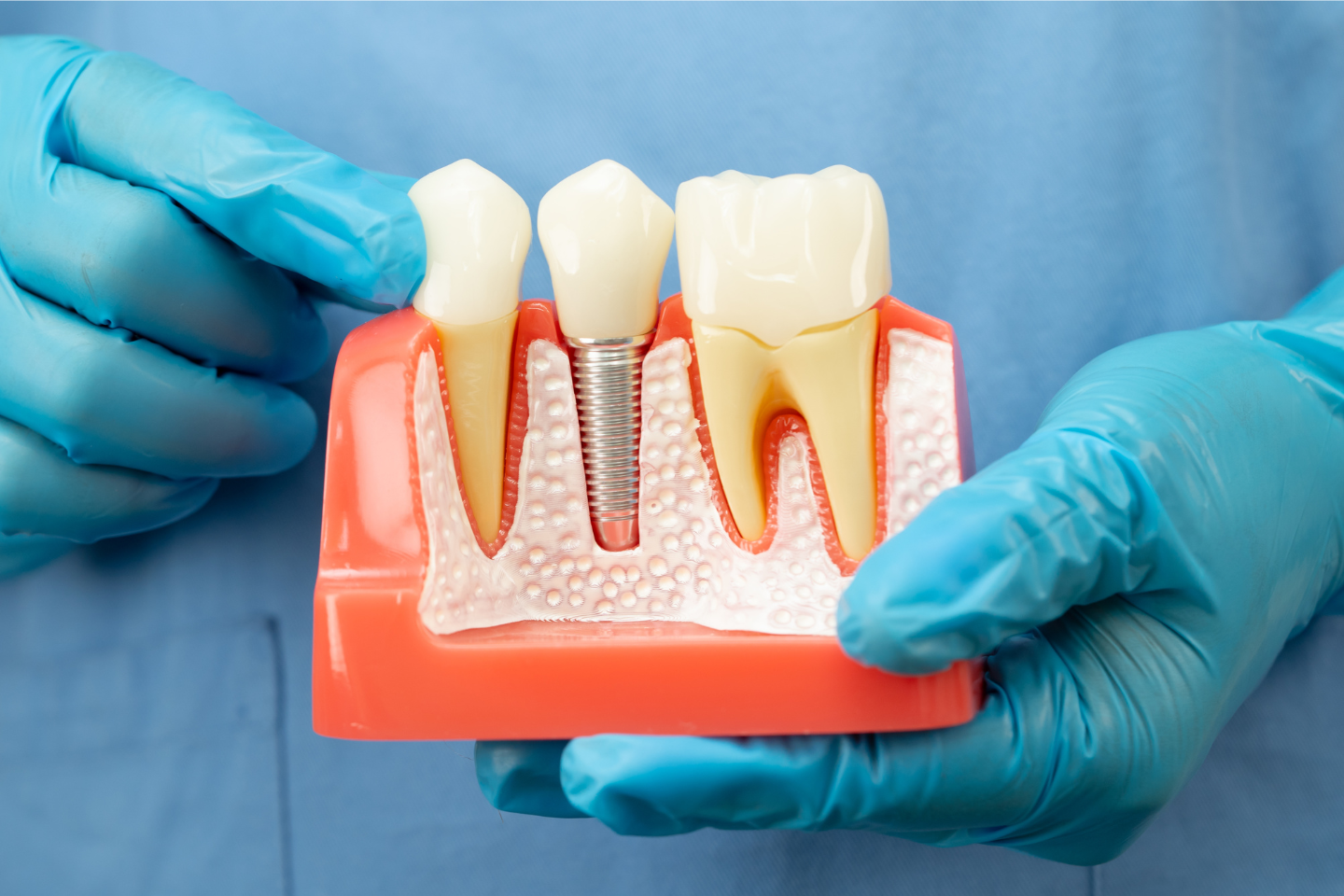
Dental implants work by placing a small titanium post in your jawbone, which acts like a natural tooth root.
Over time, the bone bonds with the implant, creating a strong and stable base for a replacement tooth. Because of this design, implants are considered one of the most reliable tooth-replacement options, with success rates often exceeding 90–95% in many cases.
Still, it’s normal to want clear answers before choosing a treatment that affects your oral health for years.
So, let’s dig in and see whether dental implants are truly a safe long-term solution.
A dental implant is a small titanium post that replaces the root of a missing tooth. It is placed directly into your jawbone, where it acts as a strong foundation for a new artificial tooth.
Instead of just replacing the visible tooth, the implant replaces the entire tooth structure from the root up.
There are 3 main components of a dental implant:
Once the implant is placed in your jawbone, your body starts a natural healing process called osseointegration.
Osseointegration is the biological process your jawbone grows around the implant and bonds with it, locking it firmly in place.
Over time, the implant becomes as stable as a natural tooth root. That stability allows you to chew, speak, and smile normally without worrying about movement or slipping.
You may be wondering, how long do dental implants last? Well, dental implants are known for their high long-term success rate.
In fact, most studies show that over 90–95% of implants remain successful even after 10–15 years. This means the majority of patients keep their implants working normally for many years.
That said, survival does not always mean perfect condition. An implant can stay in place but still need maintenance later, so regular checkups matter.
The FDA also notes that cleaning the implant well and seeing your dentist regularly are important for long-term success.
So, what should you take from this?
Dental implants are considered a reliable long-term option for many people, especially when they are placed properly and cared for consistently.
When you lose a tooth, the effects go beyond appearance. The gap can slowly affect your jawbone, nearby teeth, and how you chew or speak. Dental implants help solve these problems because they replace the missing tooth from the root to the crown, just like a natural tooth.
Here are the key ways implants support your long-term oral health.
Your natural teeth do more than help you chew. Their roots send pressure into the jawbone whenever you bite or eat. This pressure keeps the bone active and healthy.
When a tooth is missing, that stimulation disappears. Over time, the bone in that area may start to shrink.
Dental implants solve this problem because the implant post sits inside the jawbone and acts like a replacement root. Every time you chew, the implant transfers pressure to the bone.
This helps your body maintain strong bone structure.
Because of this, implants help:
In simple words, implants help your jaw stay healthy and stable for the long term.
When a tooth is missing, the teeth next to the gap may slowly start moving into that space. This shift can change your bite and alignment.
Over time, this movement can cause crooked teeth, bite problems, and even difficulty cleaning between teeth
Dental implants fill the empty space and act like a permanent replacement tooth. This keeps surrounding teeth in their natural positions.
As a result, your teeth stay properly aligned and balanced.
Missing teeth can make chewing uncomfortable or less effective. Many people begin avoiding certain foods because chewing becomes difficult.
Dental implants are securely placed in the jawbone, so they stay stable while eating. Once the implant heals, it works much like a natural tooth.
This allows you to:
Because implants stay firmly in place, you don’t have to worry about movement while eating.
Teeth play an important role in how you pronounce certain words. When teeth are missing, speech can sometimes sound unclear.
Dental implants restore the natural structure of your mouth. This gives your tongue and lips the support they need to form sounds properly.
As a result, many people notice clearer speech, and better pronunciation.
Some tooth replacement options depend on nearby teeth for support. This can put pressure on healthy teeth.
Dental implants work differently. They stand on their own and do not rely on surrounding teeth.
This means your natural teeth stay untouched and protected.
Another advantage is that implants are easy to maintain. You can clean them just like natural teeth with regular brushing, flossing, and dental checkups.
Dental implants are generally safe, but like any surgical procedure, a few risks can occur. But fortunately, most complications are rare and manageable when treated early.
Here are the main risks you should know.
After the implant is placed, bacteria can sometimes infect the surrounding gum tissue.
You may notice swelling, pain, or bleeding around the implant. If untreated, infection can damage the bone supporting the implant.
In rare cases, the implant may be placed too close to a nerve.
This can cause numbness, tingling, or sharp pain in your lips, gums, or chin. These symptoms may improve with treatment but should be checked quickly.
If implants are placed in the upper jaw, they sit close to the sinus cavity.
A poorly positioned implant can press into the sinus and lead to sinus pressure, infection, or discomfort.
Sometimes the implant does not bond properly with the jawbone.
When this happens, the implant may loosen or fail, especially if healing is affected by infection, bone loss, or poor oral hygiene.
This condition is similar to gum disease but occurs around implants.
You might notice red gums, bleeding, or bone loss around the implant, which can eventually threaten implant stability if ignored.
Not everyone faces the same risk with dental implants. Certain health and lifestyle factors can make implant failure more likely.
For example, smoking is a major risk factor. It reduces blood flow and slows healing, which can interfere with the implant bonding with the bone.
People with poor oral hygiene or untreated gum disease may also struggle because bacteria and plaque can trigger infections around the implant.
You should also be cautious if you have uncontrolled diabetes, low bone density, or weak jawbone structure, as these conditions can affect healing and bone support.
So basically, healthy gums, good hygiene, and stable overall health greatly improve implant success.
Not always.
Dental implants work well for many people, but they are not the best option for everyone. Your dentist first checks if your mouth and body are ready for the procedure.
You’re usually a good candidate if you have healthy gums, enough jawbone, and good overall health. These factors help the implant fuse properly with your bone and stay stable for years.
But some conditions can make implants harder to succeed. For example, active gum disease, heavy smoking, or uncontrolled medical conditions may slow healing and increase the risk of implant failure.
Also, implants need strong jawbone support. If the bone is too thin or weak, extra treatments like bone grafting may be required before placing the implant.
So what should you do? Start with a professional dental evaluation. Your dentist will review your oral health, medical history, and bone structure to decide if implants are the right solution for you.
If they’re not, alternatives like bridges or dentures can still restore your smile and function effectively.
Dental implants are generally safe and reliable for long-term oral health when placed and maintained properly.
Research shows they often achieve success rates above 90% and can last decades with good care.
But here’s the key question: are you maintaining them well? Your daily brushing, flossing, and regular dental visits make the biggest difference. Stay consistent with oral hygiene, watch for unusual symptoms, and follow your dentist’s advice.
When you do that, implants can support a strong, healthy smile for many years.
Dental implants are designed to be long-term tooth replacements. With proper care and regular dental visits, many implants can last 20 years or more, and some may even last a lifetime.
Implant failure usually happens because of infection around the implant, poor oral hygiene, smoking, or weak bone support. Excess pressure from teeth grinding can also affect stability if the implant is not properly protected.
When placed correctly, implants usually protect surrounding teeth rather than harm them. They help keep nearby teeth stable and support healthy bones. However, poor hygiene can cause gum inflammation around the implant.
Yes, dental implants are widely considered safe. Studies show success rates above 90 percent, making them one of the most reliable tooth replacement options when properly placed and maintained.
Focus on consistent oral hygiene and professional care. Brush twice daily, floss carefully around the implant, avoid smoking, and visit your dentist regularly.
Explore our blog for expert advice, treatment insights and oral care tips.
Compare tooth extraction and oral surgery, including key differences and recovery expectations.

Learn 10 signs you may need oral surgery, when to seek treatment, and how early care can protect your oral health and prevent complications.

Learn whether veneers are permanent, how long they last, and what factors affect their longevity and maintenance.
.svg)



.png)

.png)
.png)



.webp)

.svg)

