Learn whether veneers are permanent, how long they last, and what factors affect their longevity and maintenance.

When considering a smile makeover, dental veneers frequently top the list of popular options. They have the ability to dramatically transform your appearance, masking everything from deep chips and cracks to severe discolouration and minor structural gaps. It is a treatment that has helped countless individuals regain their confidence, giving them a smile they no longer feel the need to hide behind a cupped hand.
However, because it is such a significant step, one of the most common questions asked during an initial consultation with an Ilchester family dentist is whether veneers are permanent.
The short answer is that the process itself is irreversible, but the physical veneers themselves will not last forever. Making the decision to get veneers means committing to a lifelong journey of maintaining and eventually replacing them. To help you decide if this treatment is the right choice for your lifestyle and goals, let us break down exactly what the permanence of veneers means, how the procedure works, and what you can do to get the maximum lifespan out of your new smile.
To understand why veneers are considered a permanent commitment, it helps to look at how they are attached to your mouth. A veneer is a ultra-thin shell, usually crafted from high-quality porcelain or composite resin, that is custom-made to fit over the front surface of an individual tooth.
For the veneer to sit flush against your existing teeth and look completely natural rather than bulky or artificial, a small amount of preparation is required. Your dentist in Ilchester will gently remove a microscopic layer of your natural enamel, typically less than a millimetre.
Enamel is the hard, protective outer coating of your teeth. Unlike your skin or bones, enamel cannot regenerate or repair itself once it has been removed. Once that structural layer is gone, the underlying tooth is permanently altered and will always require an artificial covering to protect it from bacteria, decay, hot and cold temperatures, and physical wear. Therefore, while the physical restoration will eventually need to be swapped out for a new one, you can never simply decide to have your veneers removed and go back to your completely natural teeth.
Not all veneers are created equal, and the material you choose plays a massive role in how long your new smile will remain intact before needing maintenance. During a visit to Ilchester Dental & Implant Centre, you will typically discuss two main types of materials.
Porcelain is widely regarded as the gold standard for long-term dental aesthetics. It is incredibly durable, highly resistant to staining from coffee, tea, and red wine, and mimics the natural translucent qualities of real tooth enamel beautifully.
On average, a well-looked-after set of porcelain veneers will last anywhere between ten and twenty years. They require a bit more preparation work on your teeth initially and are custom-fabricated in a specialised dental laboratory, but their longevity makes them a highly popular choice for a long-term investment.
Composite veneers are created using a tooth-coloured cosmetic resin that is applied directly to the surface of the tooth, shaped by hand, and hardened using a high-intensity curing light. This method often requires much less prep work, and in some select cases, no enamel needs to be removed at all.
While they are a fantastic, cost-effective option that can be completed in a single visit, composite resin is a softer material than porcelain. As a result, composite restorations generally have a shorter lifespan, usually lasting between five and eight years. They are also more prone to chipping and gradual discolouration over time, meaning they will require more frequent touch-ups or complete replacements.
While the bonding agents used to attach the restorations to your enamel are incredibly strong, nothing in the human body is completely immune to the passage of time. Eventually, your veneers will show signs of age. Here is why they do not last forever:
As we grow older, our gum tissue naturally begins to recede. When your gums pull back slightly, it can expose the margin, which is the boundary line where the veneer meets your natural tooth structure. This can create a small, visible ledge or dark line near the root of the tooth, which can compromise the aesthetics of your smile and create a tiny trap for plaque.
Your teeth undergo an immense amount of physical pressure every day from chewing, biting, and speaking. Over a decade or more, this continuous mechanical stress can cause micro-fractures in the porcelain or composite resin, eventually leading to structural chips or cracks.
It is vital to remember that while a porcelain veneer cannot decay, the natural tooth underneath it absolutely can. If your oral hygiene slips, plaque and bacteria can creep under the edges of the restoration, causing cavities. If the underlying tooth structure becomes compromised by decay, the veneer will lose its support and will have to be removed so the tooth can be treated with a filling or a crown.
The long-term success of your cosmetic treatment is a collaborative effort. While your clinical team ensures the restoration is placed with absolute precision, your day-to-day habits determine how many years of service you get from them. Here are a few simple ways to protect your investment:
Brush your teeth at least twice a day using a non-abrasive fluoride toothpaste and a soft-bristled brush. Harsh, whitening toothpastes can scratch the polished surface of your veneers over time, making them lose their natural shine. Daily flossing is equally critical to keep the margins free from harmful plaque buildup.
If you have a habit of clenching your jaw or grinding your teeth at night while you sleep, the intense forces can easily shatter porcelain or snap composite resin. Speak openly with your team about having a custom-made nightguard fabricated to cushion your teeth and protect your cosmetic dental work while you rest.
Never use your teeth to open plastic packaging, bite your fingernails, chew on the ends of pens, or crack open nuts. These habits put localised, uneven pressure on the restorations, which can cause them to debond or fracture instantly.
Investing in your smile is a life-changing decision that requires careful thought and the right guidance. If you want to explore whether porcelain or composite treatments are a good fit for your individual goals, the friendly team at Ilchester Dental & Implant Centre is here to help walk you through every option. Please feel free to get in touch with an Ilchester family dentist today to arrange an initial consultation, map out your personalised treatment plan, and discover how to achieve a healthy, beautiful smile that stands the test of time.
Q. Is the veneer procedure painful?
The process is typically very comfortable. For the preparation stage, local anaesthetic is used to entirely numb the area, ensuring you do not feel any discomfort. Afterward, some patients experience mild, temporary sensitivity to hot or cold drinks for a few days, but this quickly settles down.
Q. Can veneers be repaired if they chip?
If you have composite veneers, minor chips can often be patched up quite easily in a single clinical visit. However, if a porcelain veneer sustains a significant fracture or crack, it generally cannot be patched up seamlessly. In most instances, the entire shell will need to be replaced.
Q. Will my natural teeth underneath rot away?
No, your teeth will not decay simply because they are covered. As long as the restorations are fitted properly and you maintain excellent brushing and flossing habits at home, the natural tooth structure underneath will remain perfectly healthy and secure.
Q. Can I get my veneers whitened if they stain?
Traditional teeth whitening gels only work on natural tooth tissue; they have absolutely no effect on porcelain or composite materials. If your natural teeth have discoloured around your restorations, a whitening treatment can help balance the shades, but the veneers themselves will stay the exact colour they were on the day they were fitted.
Explore our blog for expert advice, treatment insights and oral care tips.
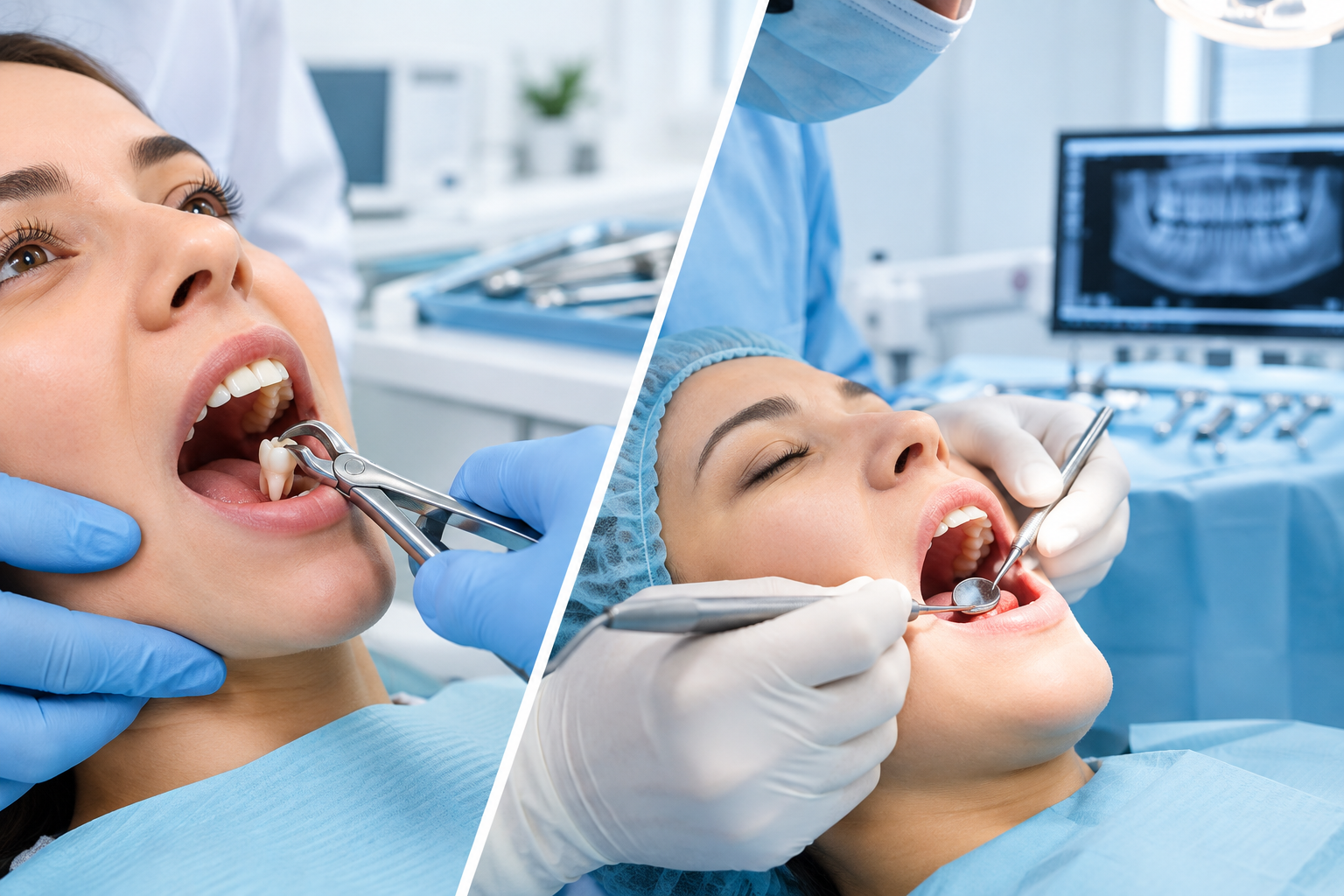
Compare tooth extraction and oral surgery, including key differences and recovery expectations.
Learn 10 signs you may need oral surgery, when to seek treatment, and how early care can protect your oral health and prevent complications.
Learn whether veneers are permanent, how long they last, and what factors affect their longevity and maintenance.
.svg)



.png)

.png)
.png)



.webp)

.svg)

