Compare tooth extraction and oral surgery, including key differences and recovery expectations.
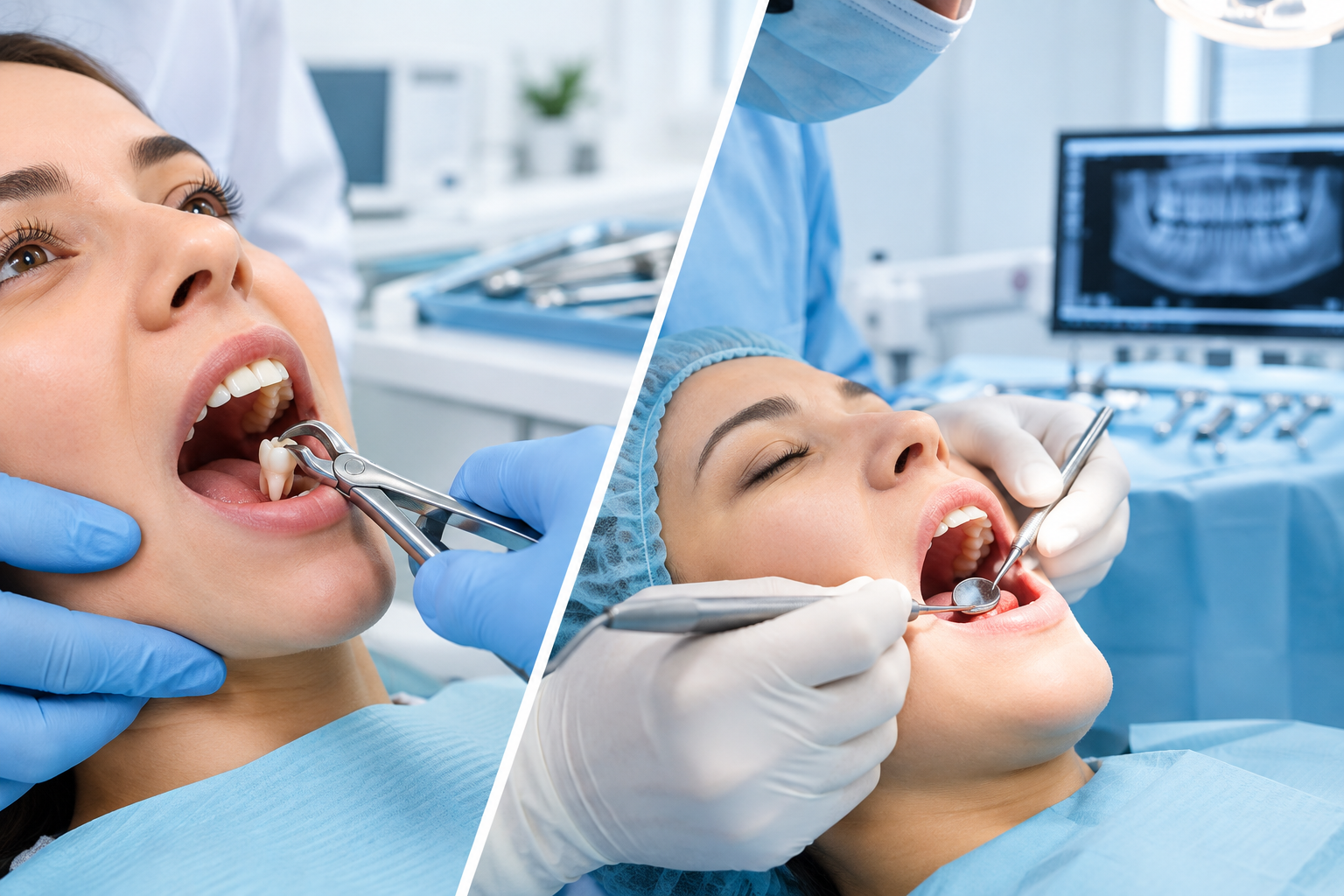
Hearing that you need a tooth removed can sound intimidating, particularly if terms like "simple extraction" or "oral surgery" are mentioned. Many patients naturally feel hesitant when faced with dental procedures. It is easy to assume that any tooth removal is a major ordeal, but in reality, dental care spans a full spectrum of procedures tailored to your specific clinical needs.
Understanding the difference between a routine tooth extraction and oral surgery helps demystify the process and relieves unnecessary anxiety. While a simple extraction involves removing a visible tooth above the gumline, oral surgery addresses more complex structural issues beneath the gums or within the jawbone. Whether you consult an Ilchester family dentist for routine check-ups or visit Ilchester Dental & Implant Centre for comprehensive evaluation, knowing what each procedure entails ensures you feel confident and fully prepared for your treatment.
A simple tooth extraction is a routine dental procedure performed when a tooth is visible in the mouth and can be removed without making surgical incisions into the gum tissue. It is one of the most common treatments carried out in general dentistry.
Dentists recommend simple extractions for a variety of everyday oral health reasons. These include:
The process for a simple extraction is straightforward and efficient. First, your clinician applies a local anaesthetic to completely numb the tooth, surrounding gum tissue, and nearby bone. You remain awake throughout the procedure, but you will not feel pain, only a sensation of mild pressure as the tooth is worked loose.
Using a dental instrument called an elevator, the clinician gently loosens the tooth within its socket. Once the tooth is sufficiently mobile, dental forceps are used to lift the tooth out. Because no cuts are made into the gums and no bone removal is required, simple extractions generally take only a few minutes per tooth. Healing is fast, and most patients return to light activities the following day.
Oral surgery is a broader branch of dentistry that deals with complex conditions involving the teeth, gums, jawbones, and soft tissues of the mouth. When a dental problem cannot be resolved through standard non-surgical methods, oral surgery provides a safe and effective path toward restoring your health.
Oral surgery covers a wide range of restorative and preventive procedures, including:
A tooth extraction becomes a surgical extraction when the clinician cannot easily access or lift the tooth using standard forceps. Common scenarios that require a surgical approach include:
During a surgical extraction, the clinician makes a small incision in the gum tissue to expose the hidden tooth or bone structure. In some cases, a small amount of surrounding bone is carefully removed, or the tooth is divided into smaller sections so each piece can be lifted out gently without putting unnecessary force on the jaw. The incision is then closed with small dissolvable sutures to promote clean, efficient healing.
While both procedures aim to eliminate pain, clear infection, and safeguard your overall health, key differences set them apart in terms of execution, comfort management, and post-operative care.
The primary distinction lies in accessibility and technique. A simple extraction relies on gentle physical leverage to loosen an exposed tooth. In contrast, surgical extractions and broader oral surgery require precise anatomical navigation, soft tissue reflection, and occasionally bone recontouring.
Both simple extractions and minor oral surgeries rely on effective local anaesthetics to ensure you feel no pain during treatment. You may feel mild pressure as the clinician works, but the entire area remains completely numb. For more complex surgical care or for anxious patients, sedation options may be offered to help you relax deeply throughout the appointment.
Because simple extractions cause minimal tissue disruption, initial healing occurs quickly, with most patients returning to normal daily activities within 24 to 48 hours.
Surgical extractions or bone procedures require slightly more time for complete recovery. Minor soft-tissue treatments often heal within a few days to a week, while deeper surgical work or dental implants require a longer period for full bone integration. Taking two to three days to rest at home after surgical extractions allows initial tissue healing to progress without interruption.
Whether you are scheduled for a straightforward extraction or a surgical procedure, proper preparation ensures a smooth experience and rapid recovery.
Determining whether you require a simple extraction or surgical intervention starts with a comprehensive clinical evaluation. Modern diagnostic tools allow your practitioner to examine your tooth roots and surrounding jawbone in precise detail.
An experienced dentist in Ilchester can assess the location, root shape, and density of your teeth before recommending the most appropriate approach. At Ilchester Dental & Implant Centre, care plans are tailored specifically to your individual needs, ensuring clear explanations, comfortable anaesthesia, and attentive post-operative support at every stage.
Take Control of Your Oral Health at Ilchester Dental & Implant Centre
Ignoring persistent tooth pain or putting off an extraction can cause minor dental problems to progress into more complex issues over time. Whether you need a routine dental assessment or specialised surgical treatment, getting professional advice promptly keeps your smile healthy and pain-free.
At Ilchester Dental & Implant Centre, our dedicated team is committed to delivering gentle, reassuring care in a comfortable environment. From routine check-ups with an Ilchester family dentist to advanced surgical extractions and implants with a trusted dentist in Ilchester, we guide you through every step of your journey. Contact our practice today to schedule your consultation and take the first step toward optimal dental health.
Is a surgical extraction more painful than a simple extraction?
No, neither procedure should be painful during treatment. Both simple and surgical extractions are performed under effective local anaesthesia to completely numb the treatment area. While you may feel slight pressure during the procedure, you will not experience pain. After the anaesthetic wears off, surgical extractions may involve slightly more localised tenderness, which can be managed easily with recommended pain relievers.
How long does recovery take after oral surgery compared to a simple extraction?
Recovery following a simple extraction is typically fast, with most patients resuming normal routine activities within 24 to 48 hours. For surgical extractions or procedures like dental implant placement, initial soft-tissue healing usually takes several days to a week. Plan for two to three days of light rest following a surgical procedure for optimal initial healing.
Will I need stitches after a tooth extraction?
Simple extractions rarely require stitches because the gum tissue remains intact around the socket. Surgical extractions, however, often utilise small stitches to close the incision in the gum tissue. Most practices use dissolvable stitches that gradually dissolve on their own within one to two weeks, eliminating the need for removal.
Can my regular dentist perform oral surgery?
Many general dentists have post-graduate training and clinical experience in performing minor oral surgery, including surgical extractions, wisdom tooth removal, and dental implant placement. If a case involves extreme anatomical complexity, your clinician will discuss all available options and ensure you receive the safest, most effective treatment possible.
Explore our blog for expert advice, treatment insights and oral care tips.
Compare tooth extraction and oral surgery, including key differences and recovery expectations.

Learn 10 signs you may need oral surgery, when to seek treatment, and how early care can protect your oral health and prevent complications.

Learn whether veneers are permanent, how long they last, and what factors affect their longevity and maintenance.
.svg)



.png)

.png)
.png)



.webp)

.svg)

